Along the way, I build the tools the work runs on. I write the product requirements and build with AI coding tools.
Founded in 2016 · San Jose → Taipei
Elos Skateboards
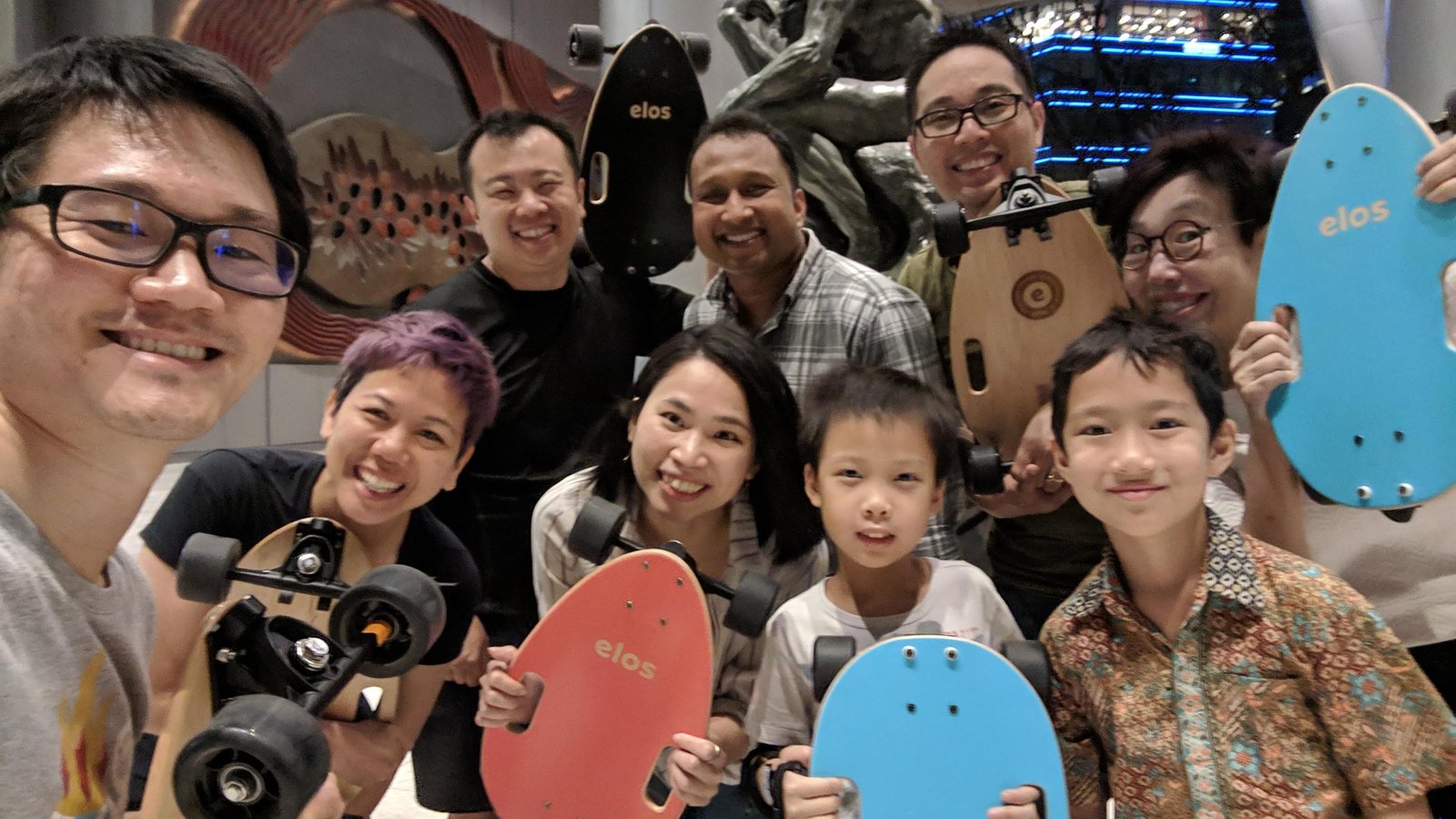
I co-founded Elos Skateboards in San Jose in 2016.As COO from 2016 to 2018, I ran marketing, branding, supply chain, procurement, and finance. Product design and R&D were outside my role.As CEO from 2018 to 2022, I led a team of about 10.Elos raised over US$450K through crowdfunding in the US, Taiwan, and Japan. A two-person team still runs the brand today.Read more ↓Show less ↑Fig. 01 — An Elos user gathering in Singapore.
Before Elos: Voltset
During my years at Lawrence Berkeley National Laboratory, I helped a hardware team on evenings and weekends.
Voltset was a smart multimeter that connected to a phone. It addressed a problem I recognized from electronics lab.
I handled logistics for Maker Faire Bay Area and the 2014 Kickstarter launch, which raised US$113,548 from 851 backers.
It was my first experience of a startup finding a problem, building a product, and taking it to people who would pay for it. I wanted to do that myself.
Early riders
Elos was an 18-inch, 4-pound board designed for everyday riding and short commutes.
Before it had a name, I rode a prototype around Berkeley. People stopped me to ask what it was.
At Maker Faire Bay Area, we sold almost 30 boards in one weekend.
That interest was easier to generate in person than online.
Showing the ride
Search ads did not work well for us at launch. The audiences searching for skateboards and longboards did not neatly match the people we were trying to reach.
In person, people could see someone riding Elos. We brought more of that experience online through creators’ videos and riders’ posts.
I organized 10–20 sponsored boards per market each quarter, with about 80 creator collaborations a year.
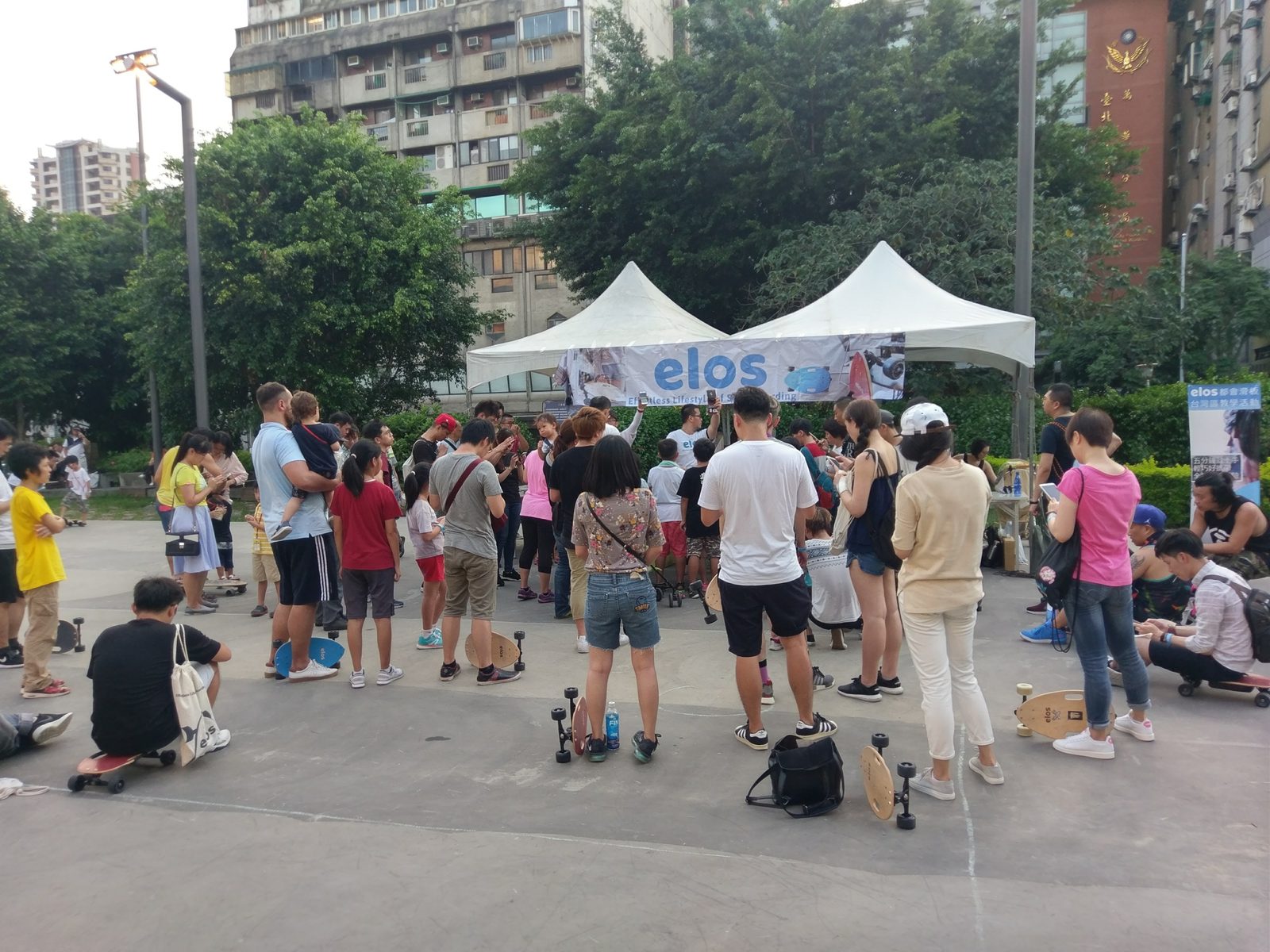
For the flyingV launch in Taiwan, we also ran a skate class for around 200 backers in Ximending. Stations covered getting on the board, riding, turning, and stopping.
Fig. 02 —
A skate class for flyingV backers in Ximending, Taipei, 2017.
Launches and collaborations
We launched on Kickstarter in 2016, flyingV in Taiwan in 2017, and Japanese crowdfunding platforms from 2018.
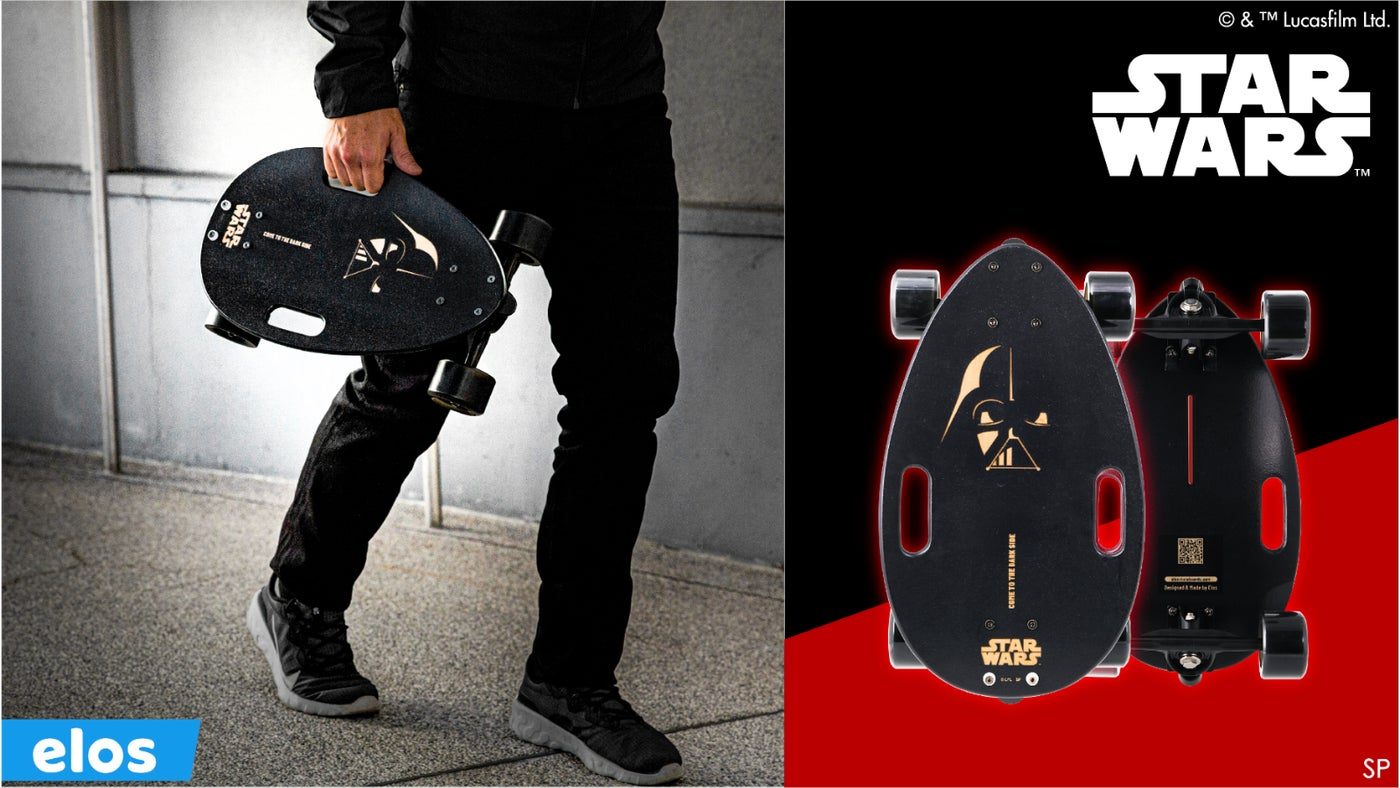
Fig. 03 —
The Star Wars edition, licensed by Disney Japan. Image from the Makuake campaign page.
Selected crowdfunding results
Kickstarter, 2016: US$83,512 from 600 backers, 149% of goal.
flyingV, 2017: approximately NT$4.49 million from 841 backers, 898% of goal.
Kickstarter, 2018: CA$127,682, approximately eight times its goal.
Makuake, 2018–2022: approximately ¥16.4 million from 870 backers, including licensed editions. We also ran a campaign on machi-ya.
Building the operation
I built e-commerce and fulfillment across Amazon US, Japan, and EU; three online stores; and warehouses in the US, Taiwan, and Japan.
We expanded into protective gear, lights, and reflectors. Several products became Amazon best sellers, and protective gear once sold 1,000 units in a month.
We also encountered copies on Amazon and Taobao, including listings using our photos and copy.
Running a smaller team
During COVID supply-chain disruptions, I reduced SKUs and automated order flows with Zapier and n8n.
The team went from about 10 people to three by 2022. Today, two people run the brand’s Amazon US and Japan stores.
What Elos taught me about the business model
We built a board intended to last, be easy to maintain, and be repairable by its owner.
That also meant low repeat purchases. Accessories had to contribute revenue beyond the initial board sale.
The experience changed what I look at when evaluating a business. I check the business model early, including whether there is a problem with how revenue can continue after the first purchase.
2026 · Reporting in use; operational flows moving to live orders
Amazon operations
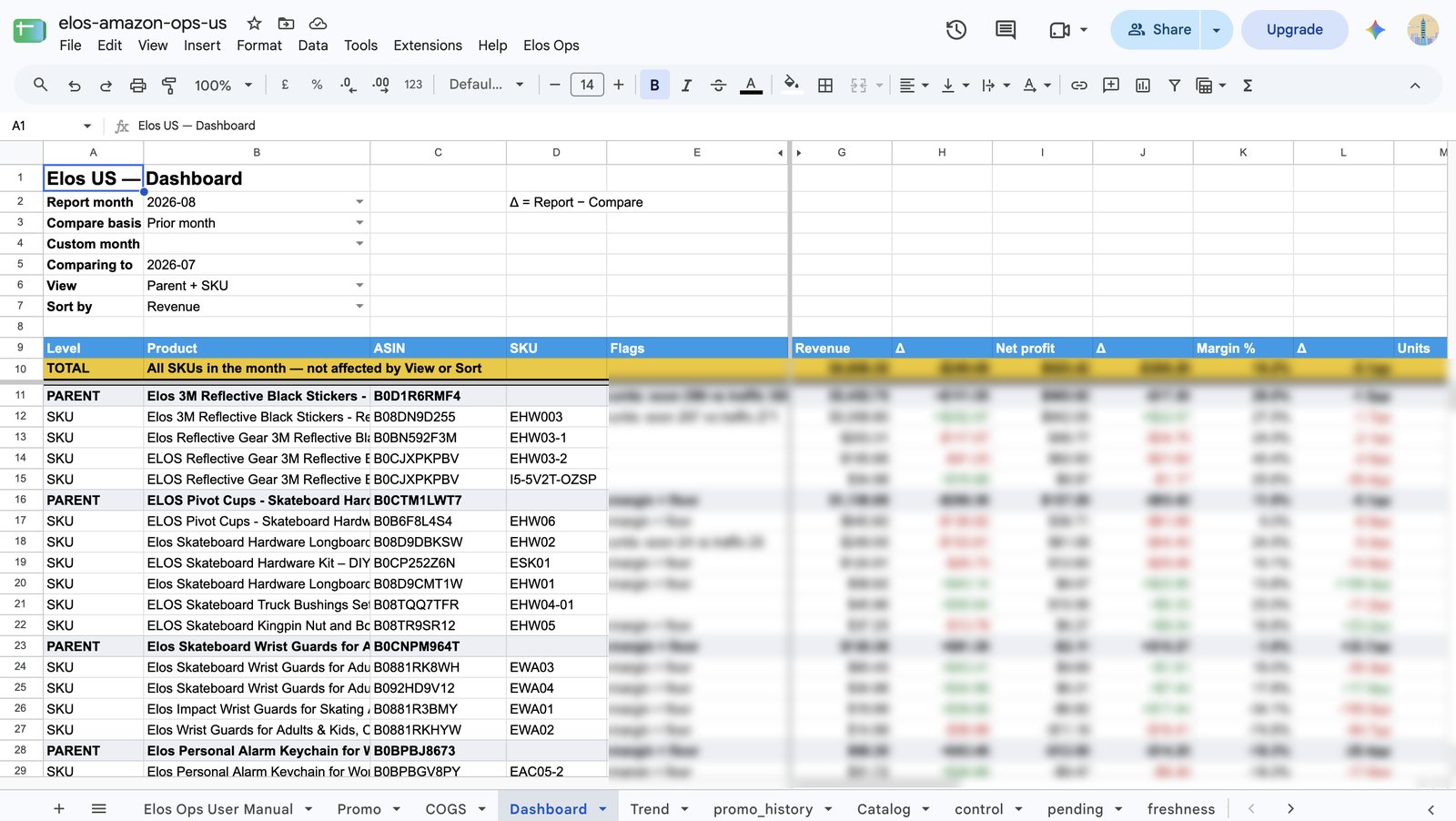
A two-person team runs Elos’s Amazon stores in the US and Japan.I built automated workflows for sales, inventory, and listing operations, along with Amazon Selling Partner API tools for shipping updates, bulk price changes, and performance reporting.Read more ↓Show less ↑Fig. 04 —
The monthly dashboard for Elos US in Google Sheets, August 2026. Revenue, profit, margin, and unit figures are blurred.
I use the dashboard to review monthly performance.
Developer access was approved in July 2026. The operational flows have been built and are moving to live orders.
Built with: TypeScript, Vercel, Google Sheets, and Amazon SP-API.
Since 2022 · Taiwan · Through Brander and DayOne Solutions
Working with manufacturers
Since 2022, I’ve worked with seven Taiwanese manufacturers and brands on positioning, go-to-market, and operations. My current focus is building the sales systems they run day to day.Most clients renewed at least twice and stayed for more than two years.Read more ↓Show less ↑Fig. 05 —
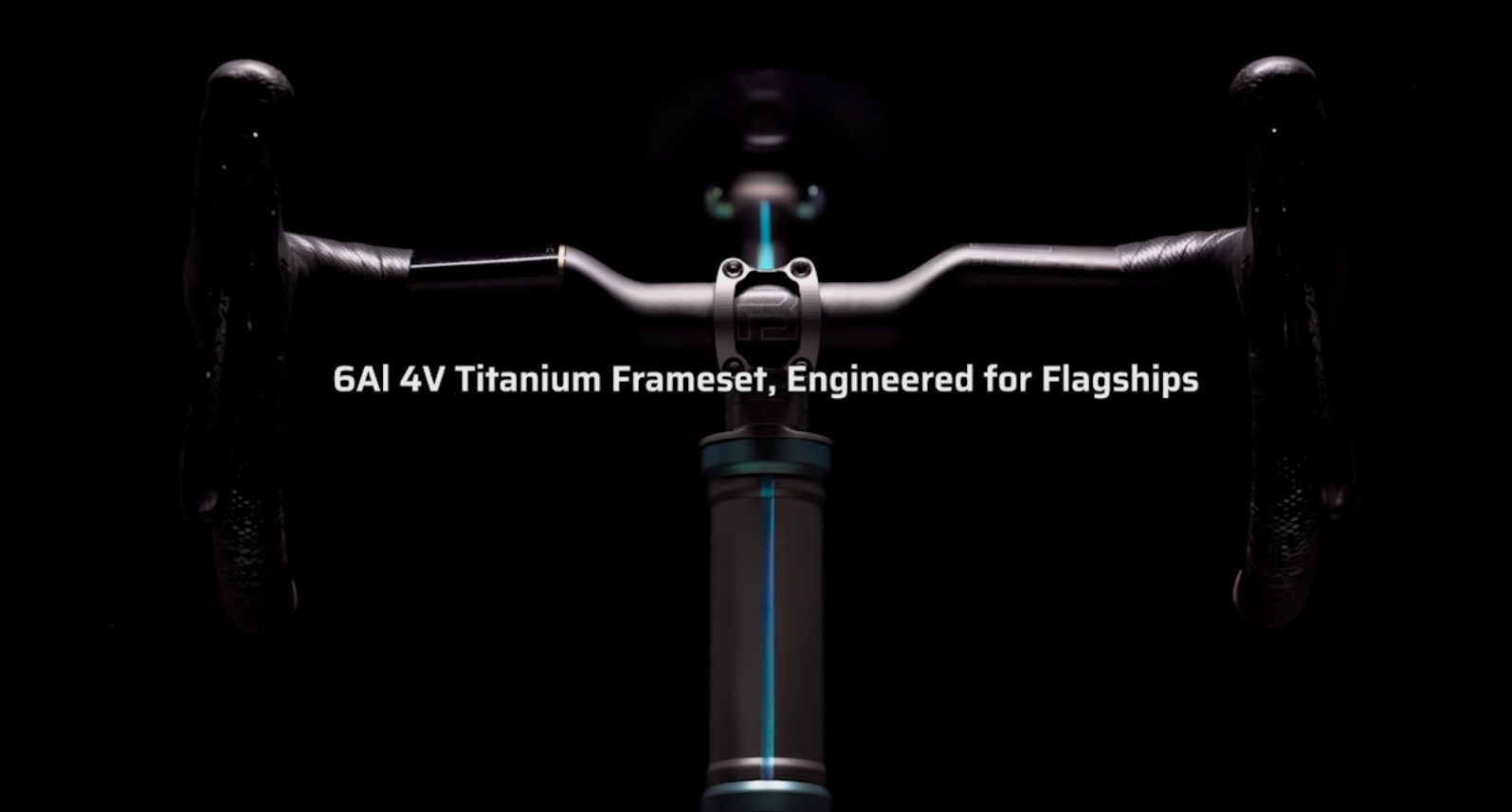
A frame from ORA Engineering’s brand film, which won a Red Dot Award in 2025.
Different kinds of transition
The companies I worked with faced different situations: engineering capabilities that were difficult to communicate to buyers, a second generation taking over the company, or expansion from Taiwan into international markets.
The work usually starts with positioning and communication. Then I run operations and build the processes and systems the company’s own team can take over.
ORA Engineering — a sales-operations system
In development · July 2026–January 2027
ORA Engineering manufactures titanium bicycle frames in Taichung.
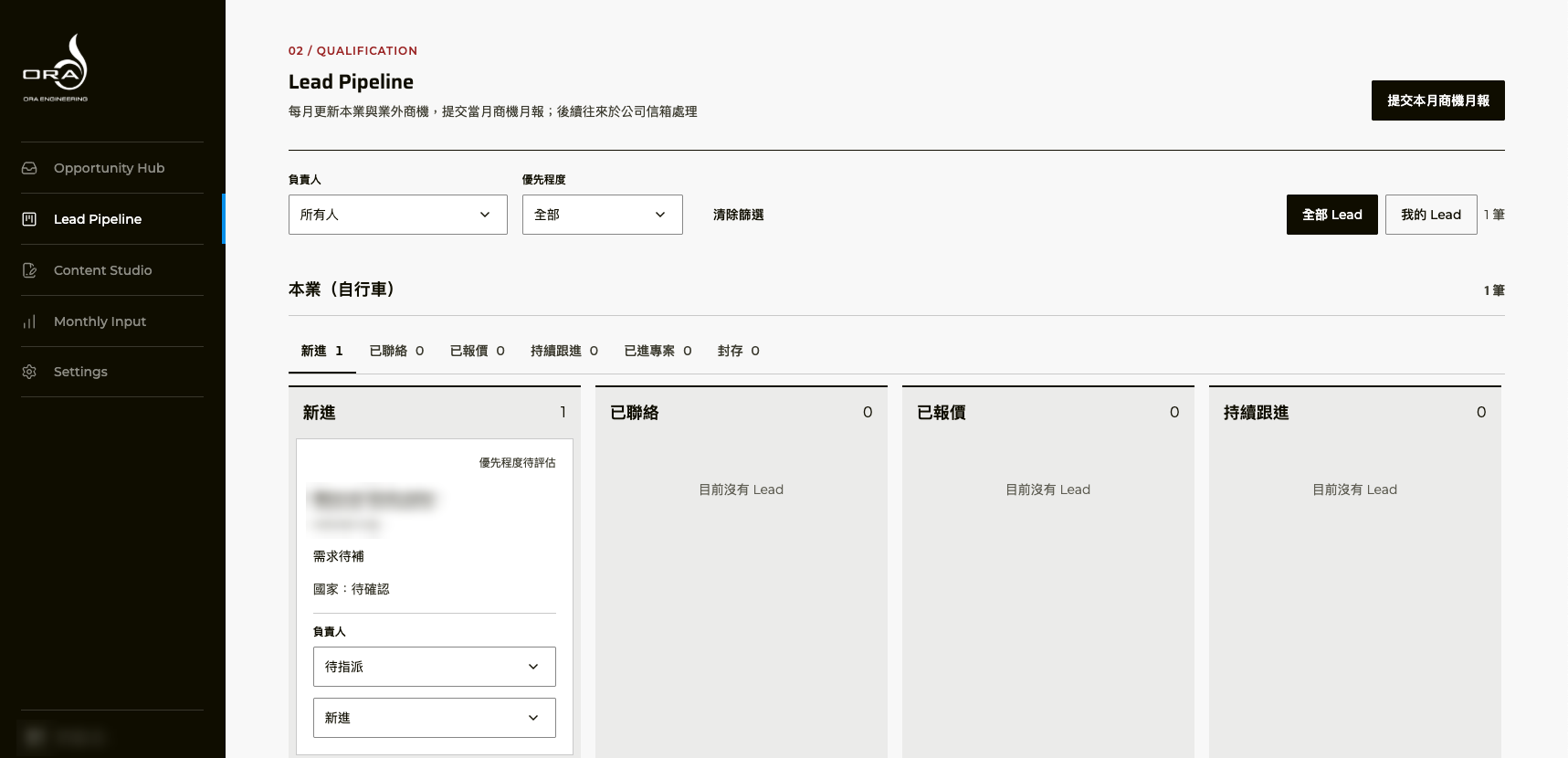
I’m designing and building ORA’s internal sales-operations product. It has four parts:
A lead hub.
AI-assisted sales replies.
Content production.
Monthly performance reporting.
The sales workflow is designed to organize inquiry information, research leads, suggest priorities, and prepare first English reply drafts.
Routing and sales decisions stay with the team.
Fig. 06 —
The Lead Pipeline in ORA’s sales-operations system. In development; lead and staff names are blurred.
Before the system: positioning ORA
I repositioned ORA from a contract factory competing on price to a named engineering brand.
We also ran a six-week advertising test in Australia’s 4x4 market. The campaign spent NT$14,514 and generated 383 clicks, but no brand inquiries. We stopped it and moved the effort to trade-show follow-up.
The engagement renewed three times over 30 months.
Ciao Laser Works — a LINE-based CRM
Brand strategy and a LINE-based CRM for a custom laser studio, built on the client’s own accounts. The engagement has continued for more than 24 months.
SolidFocus — positioning, operations, and handover
SolidFocus is a fitness and rehabilitation equipment manufacturer with 45 years of experience.
I wrote a 10-month international communication plan around its positioning as an engineering- and medical-grade development partner.
The work included a rebrand and website, followed by about a year of marketing operations.
After roughly 2.5 years of working together, I recommended hiring an in-house marketer. I trained the new hire and handed over the systems and work.
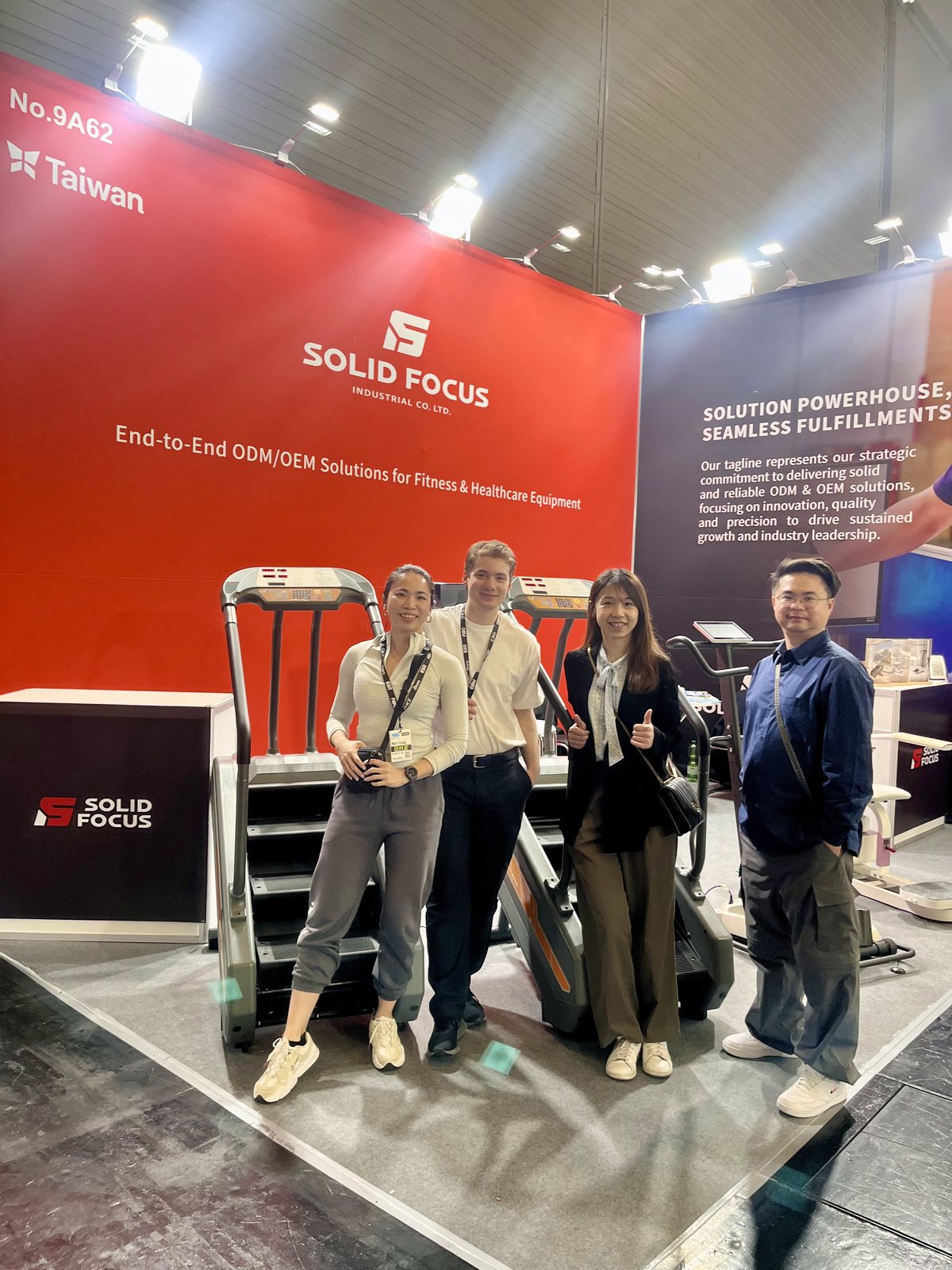
Fig. 07 — At the SolidFocus booth at FIBO, Germany.
TeamJoined — from Taiwan into Southeast Asia
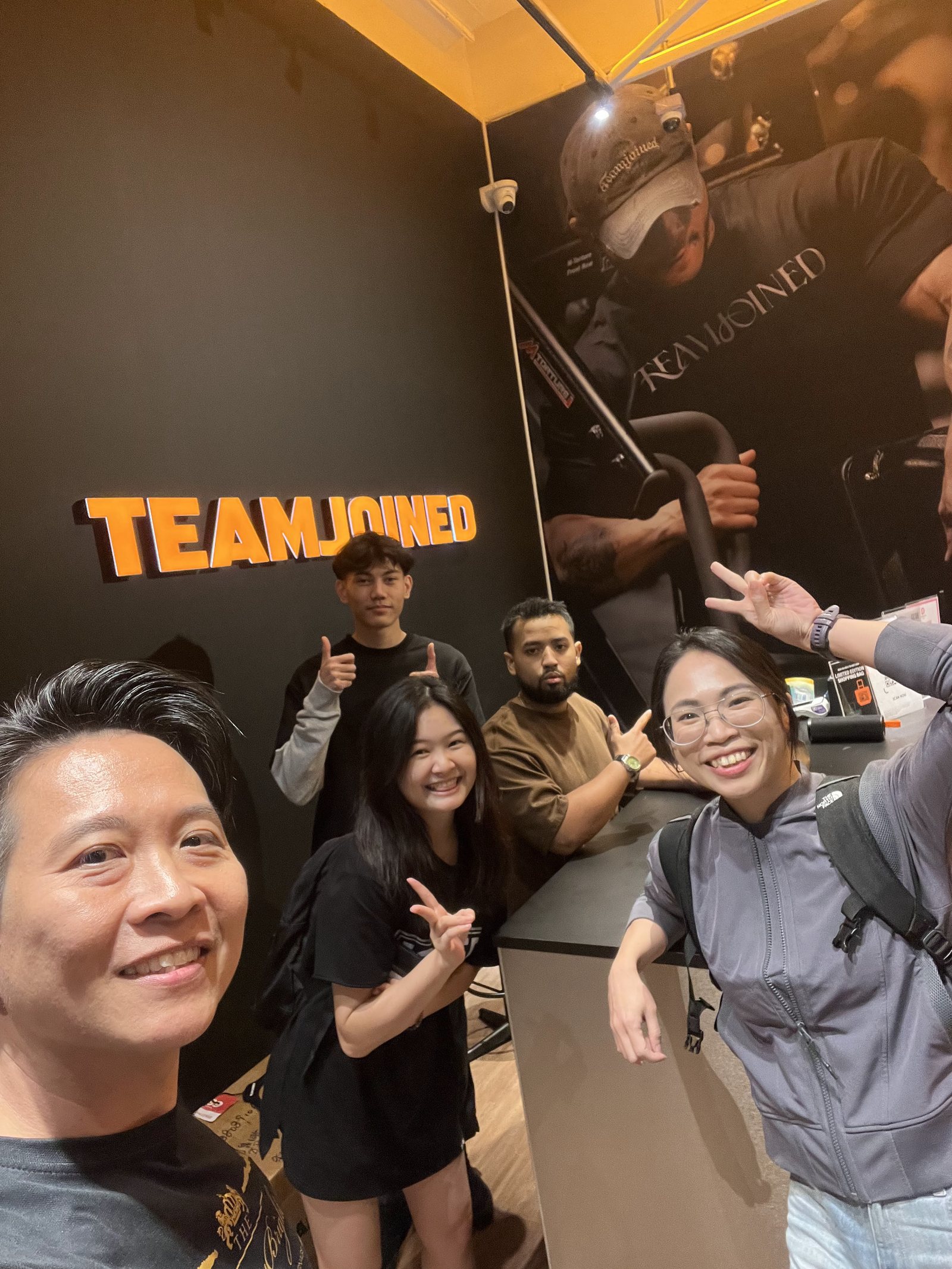
I helped TeamJoined expand from Taiwan into Malaysia and other Southeast Asian markets.
For more than three years, I led its marketing team and international communication.
Rebranding after a second-generation handover. After about four months, the work was handed to the company’s marketing agency.
2026 · In daily use
Bookkeeping (fafa)
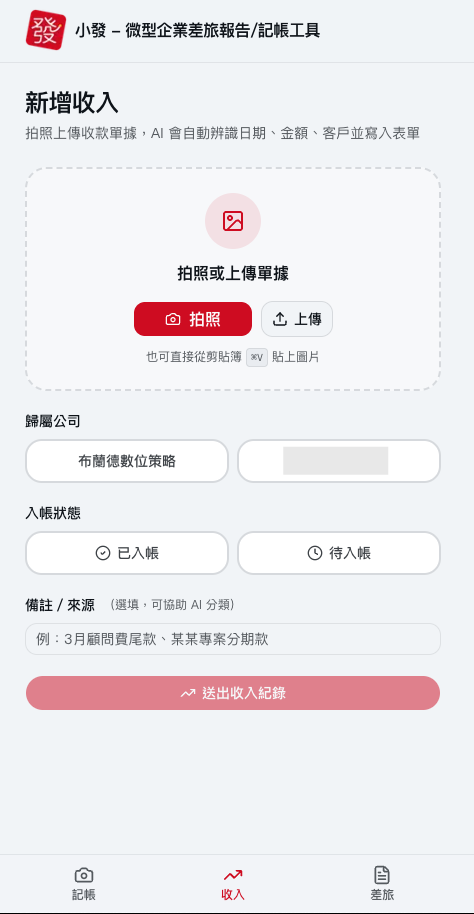
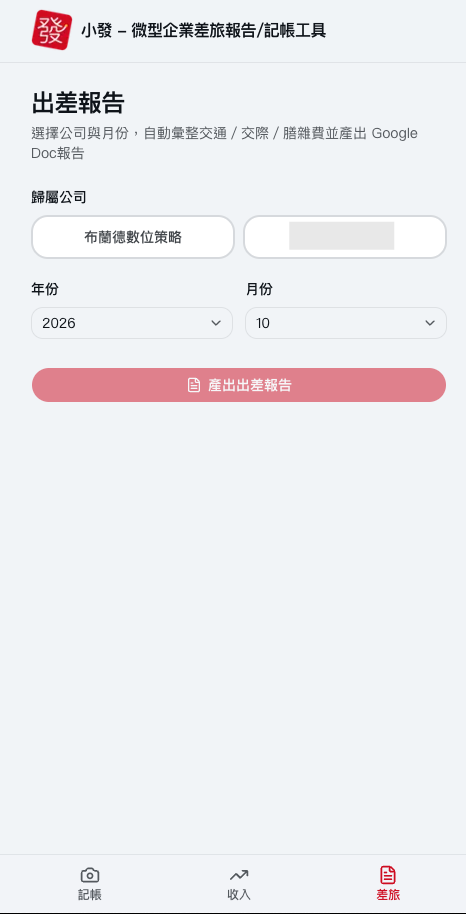
I built fafa for bookkeeping and travel-expense reports across my two companies.It tracks income and expenses and produces travel-expense reports using Google Sheets.An open-source version for other founders is next.
Fig. 09 —
fafa’s three screens: expenses, income, and travel-expense reports.
2024–2025 · Discontinued
Marketing Monster
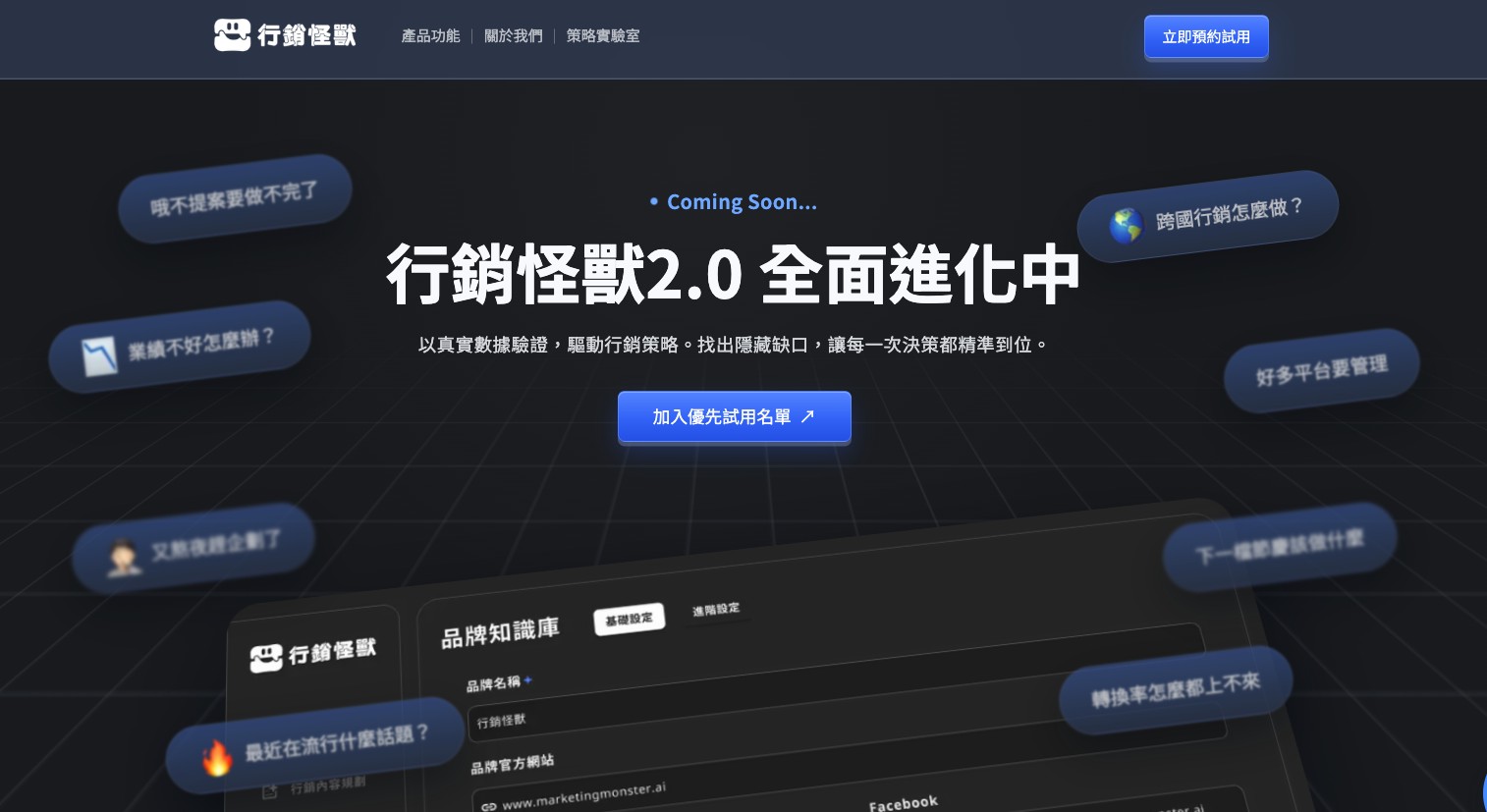
Marketing Monster was an AI marketing-content product. I released it to approximately 100 beta users. I later decided not to continue it.Read more ↓Show less ↑Fig. 10 — The Marketing Monster website.
It analyzed each company’s website, social channels, and brand context, then used that profile to inform content generation in a chat interface.
What I built
I developed the application with Cursor and designed its grounding and guardrail layer.
Each generation included structured brand facts, tone-of-voice rules, and negative prompts intended to reduce hallucinations and generic, AI-sounding copy.
Built with: Next.js, Supabase, and OpenAI APIs.
What I tested
I tracked beta usage in Mixpanel for two months and conducted one-on-one interviews with 12 users.
The data and interviews informed my decision about whether to continue the product.
What led me to stop
The beta exposed different needs across the users I was trying to serve.
For individual users, charging was difficult when free alternatives were available.
For small businesses, the product depended on owners seeing enough value in the differences in copy and strategy to pay for them. I did not see a workable business in that proposition.
The platform also carried ongoing maintenance costs, while pricing had to compete with larger software companies.
My assessment was that I could not compete on price and carry those costs without outside capital. I decided not to continue the product, before raising money.
For Marketing Monster, the layer I had built around an existing model did not provide enough competitive advantage to justify continuing.